Showing posts with label historical fiction. Show all posts

Tuesday, December 15, 2015

Outlander (STARZ Original Series)


Summary:

Outlander the television series “Follows the story of Claire Randall, a married combat nurse from 1945 who is mysteriously swept back in time to 1743, where she is immediately thrown into an unknown world where her life is threatened. When she is forced to marry Jamie Fraser, a chivalrous and romantic young Scottish warrior, a passionate relationship is ignited that tears Claire's heart between two vastly different men in two irreconcilable lives.”
(IMBD)

Review:

            For as long as recorded history has existed, mankind has had a fascination with time travel. Whether the motivation stems from the desire to rewrite history or to simply experience a time far removed from one’s own, the notion of leaving the present to travel to a distant past has inspired fictional works such as A Wrinkle in Time and even A Christmas Carol. While escapism has always been the common thread, be it voluntary or not, the conflict of past meeting present is always an interesting mix of confusion and enlightenment. True to form, Diana Gabaldon’s Outlander series falls within these bounds. The involuntary time travel of Claire Randall brings two vastly different worlds crashing into each other, creating a love story that transcends both time and space. Now brought to life on the small screen, fans of Gabaldon’s novels can watch the pages unfold right before their very eyes on the STARZ network blockbuster series -- OUTLANDER.
            The year is 1945 and World War II has just ended. Claire Randall, a military nurse who has seen the absolute horrors of war, has returned to her home to be with her husband Frank. Frank also served in the war with British Intelligence. After being separated for the majority of 6 years, the couple decides to reconnect on a second honeymoon to Scotland. During the onset of their travels through the highlands, Frank shows off his considerable historical knowledge, much to the indifference of Claire. While she politely listens to Frank’s ramblings, she finds herself being distracted by the beautiful scenery of the Scottish countryside. Eventually they reach their destination, and Frank becomes absorbed with tracking down any genealogical information on his ancestor Captain “Black Jack” Randall who served during his military career in the Scottish Highlands squashing Jacobite rebellion. Franks preoccupation allows Claire quite a bit of free time to explore.
           
Claire’s exploration leads her back to a mysterious grouping of rocks that jut up from the ground in the style of Stonehenge. Just the night before, she and Frank had witnessed a troupe of woman performing an old, pagan ritual at that very location, only adding to the mysterious nature of the rock and earthen monument. As Claire enters the ringed structure, she begins to feel an eerie presence. She reaches down to pick a cluster of purple flowers and places her hands upon the most central rock formation in the grouping to steady herself. Almost immediately, she is whisked away, unbeknownst to her, back to 1743. Scared and alone, Claire makes her way back to where she parked her vehicle, only to find an empty field.
Bewildered, she runs through the forest where she encounters a man that looks oddly familiar…”Frank?” she questions. But it is not. It’s none other than Captain “Black Jack” Randall. Taken aback by why any respectable Englishwoman would be traipsing through the back woods of Scotland, Captain Randall proceeds to attempt to have his way with Claire. In swoops Jamie Fraser, a virile and ruggedly irresistible Scottish warrior, to her rescue. From this moment, Claire’s life takes a major turn, catapulting her directly center stage in the Jacobite uprising. She finds herself embroiled in mystery and intrigue, while all the while subjecting herself to danger due to her modern, free-thinking ways. As her time with the Highland clans ensues, Claire finds her loyalties to Frank and her own time in history tested.  Will she choose to follow her heart and stay in the past, or will she follow her head and try to get back to 1945?


            While I tend to be one of those book snobs who typically feel like the book is always better, I must digress that with this series, I am not so certain. The STARZ network has taken the best of Gabaldon’s books and created a vivid, visually enticing masterpiece that completely mimics what my mind’s eye created from the written word. While, in complete and total transparency, I have yet to completely read the entire 9 book series for myself (I am currently working on that faux pas), I have discussed my opinion with those who have, and they will attest that STARZ has done a fabulous job keeping with the integrity of Gabaldon’s novels.
        Outlander has its fair share of action, adventure, and intrigue to please even the most discerning palate. In other words, it’s not just for the girls. (*wink wink nudge nudge*) With other series that I watch, I find myself feigning in between seasons. With Outlander, I am waiting with baited breathe and a longing heart to find out what lays ahead for the delicious Jamie Fraser and his strong-willed Sassenach, Claire.
    I have been thoroughly enraptured by this series from episode one. The strong, distinctive characters are portrayed in such a way, that I found it hard not to become completely obsessed, and the storyline is engaging with twists and turns that keep you on the edge of your seat. Not just a “romantic frolic through the Highlands”, I give the STARZ original series Outlander two thumbs up…If only I had more thumbs to give. J
            

Friday, October 16, 2015

The Taming of the Queen

Summary:
            The post-Pilgrimage of Grace religious upheaval late in Henry VIII’s reign finds credence in another of Philippa Gregory’s prolific Tudor series. The protagonist in this story is Kateryn Parr, the sixth wife of England’s most notoriously wedded monarch. While most readers know her fate, the author puts a spin on the tangle of rival factions and also describes the reasoning behind the madness of the King of England.


Review:
Why would anyone knowingly marry a serial killer? In the most recent installment of Philippa Gregory’s Tudor Court series, The Taming of the Queen, the answer to that question becomes all too clear: because he is the KING! Kateryn Parr, the final Queen in the reign of Henry VIII, is the subject of this latest piece of historical fiction. Picking up shortly after the execution of Katherine Howard, King Henry’s fifth wife, this book introduces the world to the little known Queen Kateryn.  With most of the attention given to the more eccentric and flashy queens like Anne Boleyn and Katherine of Aragón, little has been published about Queen Kateryn until recently. I was pleasantly surprised to find that she is just as noteworthy as the more scandalous wives of King Henry.

As the story begins, thirty-year-old widow, Kateryn Parr, is in a secret affair with Thomas Seymour. After involuntarily catching the eye of the king, she is forced to end her secret affair and marry a man old enough to be her father…A man who has notoriously buried four wives - King Henry VIII. Kateryn is fully aware of the danger she faces. She is attentive to the fact that the previous queen lasted only sixteen months, and the one previous scarcely half a year. As much as her logical reservations tempt her to quickly turn tail and run, she knows that her fate would be much worse if she did. In her mind, either way, she is a dead woman walking.  She decides to accept the King’s proposal and marries him, much against her better judgement.
She takes some comfort in the fact that King Henry initially adores his new bride. She is kind and gentle with the infamous wife killer, even as he suffers from a chronic leg injury that skews his attitude and judgement in a most violent and sporadic way.  Kateryn slowly begins to trust him and makes great efforts to unite his extremely fragmented royal family. Her success leads her to be allowed more freedom. She uses this new found trust to create a free thinking study group at the heart of the court, and even rules as Regent in the absence of the King.


As trusted as she seems to be, are her efforts enough to keep her safe? As her influence as a religious reformer grows, suspicion of the Queen runs rampant amongst the anti-protestant movement that is sweeping the country. Kateryn dangerously stands out as an independent woman with a mind of her own, as evident in being the first woman to publish in English. Her exertions and sacrifices, however, are for naught as Henry’s perilous gaze turns on her.  Persuaded by the clergy and other power hungry rivals, Kateryn finds herself accused of heresy. The punishment for such a crime is death by fire, and her husband, the king, has signed the warrant…

(As those who regularly read the Lit Writ know, it can be safely assumed that Philippa Gregory is my favorite writer in this genre. So, in the spirit of full disclosure, I feel I must preface the following commentary by divulging that bit of info.)

After finishing the previous book in this series, a small part inside me was sad to say the very least. Like an addict, I searched frantically to find my next historical fiction fix. After reading several other authors, who were fantastic in their own right, I was still left feeling a little empty. Then, much to my joyous elation, I saw The Taming of the Queen on an upcoming release list and immediately put it on hold. While this is not my favorite book in the series, I am happy to report that I learned more from this work than from any of the others.

Kateryn Parr is a little known force in the long list Henry’s wives. She was well educated and strong willed. Considerably older than most of Henry’s brides, Kateryn was the perfect match for an aging and debilitated Henry. She managed to bring his royal children all under the same roof…a feat unsuccessfully attempted by others in the past. While Henry was easily swayed by his mates in religious matters, she was the first to have the royal authority to translate and publish religious works into the common tongue – an allowance that almost cost her her life. Ultimately, in a great disservice to her legacy, history would push her aside in favor of more “Hollywood- ready” queens like Anne Boleyn and Katherine of Aragon.  This, however, does nothing to diminish her spirit and achievements throughout her reign.

As I close yet another series by Philippa Gregory, I am sadden by the fact that it is over, while none the less excited that I was able to delve into such a little known Queen who pleasantly surprised me with her tenacity and bravery in the face of a monstrously evil force like King Henry VIII. I highly recommend not only this book, but the entire series to anyone interested in this time period. I give The Taming of the Queen 4 stars and look forward to devouring whatever dynasty Philippa Gregory decides to tackle next.


Wednesday, October 29, 2014

The King's Curse


Summary:

Regarded as yet another threat to the volatile King Henry VII’s claim to the throne, Margaret Pole, cousin to Elizabeth of York (known as the White Princess) and daughter of George, Duke of Clarence, is married off to a steady and kind Lancaster supporter—Sir Richard Pole. For his loyalty, Sir Richard is entrusted with the governorship of Wales, but Margaret’s contented daily life is changed forever with the arrival of Arthur, the young Prince of Wales, and his beautiful bride, Katherine of Aragon. Margaret soon becomes a trusted advisor and friend to the honeymooning couple, hiding her own royal connections in service to the Tudors.

           After the sudden death of Prince Arthur, Katherine leaves for London a widow, and fulfills her deathbed promise to her husband by marrying his brother, Henry VIII. Margaret’s world is turned upside down by the surprising summons to court, where she becomes the chief lady-in-waiting to Queen Katherine. But this charmed life of the wealthiest and “holiest” woman in England lasts only until the rise of Anne Boleyn, and the dramatic deterioration of the Tudor court. Margaret has to choose whether her allegiance is to the increasingly tyrannical king, or to her beloved queen; to the religion she loves or the theology which serves the new masters. Caught between the old world and the new, Margaret Pole has to find her own way as she carries the knowledge of an old curse on all the Tudors.

Review:

            I have recently finished devouring the greatly anticipated finale to Philippa Gregory’s Cousin’s War Series entitled The King’s Curse, and I must say it was well worth the wait! In this final installment, Gregory brings the reader into the lavish and dangerous court of King Henry VIII as seen through the eyes of Margaret Pole. Margaret is the close cousin of Elizabeth of York, mother of King Henry VIII. She is the daughter of his uncle George, Duke of Clarence, who was killed for speaking treasonously against his own brother, King Richard. With such a strong link to the throne, Margaret is safely married off to a loyal Knight to ensure that she is not a threat to the reign of King Henry VII, a Tudor and sworn enemy of the York dynasty. She lives in utter anonymity until the fateful day when the newly married Prince of Wales is sent to live under her roof.
As the story opens, Arthur, the Prince of Wales and his young Bride, Katherine of Aragon are being looked after by Margaret, who has been appointed their royal guardian during their honeymoon. Events quickly turn tragic, and Prince Arthur falls ill and dies of the Sweat, leaving poor Katherine a young widow. On his deathbed, Arthur commands Katherine to promise that she will deny that they consummated the marriage, leaving her free to marry his younger brother Henry, who is to be the heir to the throne. Katherine, strong willed just as her mother the Spanish militant Queen Isabella I, heads for London to fulfill her promise to her dying love. Once there, the accusations stir up in regard to her claim of a non-consummated marriage to Arthur, prompting Margaret to be summoned for questions by the overly pious grandmother of the king. Margaret keeps her promise to Katherine and Arthur, and never reveals the knowledge of their honeymoon bliss, insisting that Katherine is a still as pure as the driven snow. Margaret is rewarded by being installed as Queen Katherine’s chief Lady-in-Waiting, beginning a fiercely loyal and loving bond between the two women.
Rumors and turmoil begin to fly around the court as the King openly courts, not one, but two young Boleyn girls, leaving many to wonder what type of king would raise a commoner so high. While many at court privately discuss their displeasure, no one dares confront him on the matter for fear of being on the receiving end of his ever increasing temper. Katherine is publicly shamed with the knowledge that her once dotting husband has allowed not only his eyes, but his heart to stray, leaving her devastated and demeaned in the wake of the Boleyn scandal that all but shattered England. Though it threatens to destroy all that she holds dear, Margaret manages to hold firmly to her beliefs, even when confronted with the choice between her fealty to a pompous and irresponsible King and her love and loyalty for Katherine. This determination to do what is right, however, may very well cost her her life.
 If I have not already expressed this fact, I feel I must disclose out of complete transparency that Philippa Gregory is my favorite author of this genre of historical fiction. I particularly like her way of telling the story not from the obvious voice of the royal involved, but often from a bystander, or from the vantage of someone who merely plays a supporting role. She is a master of finding the strength and fortitude of the women who becomes the storyteller. Also, her attention to historical detail and accuracy speaks volumes to her academic prowess in research and writing. I have previously reviewed the series “The White Queen” that covers the material in this, as well as three other books in the Cousin’s War series. (The White Princess, The Red Queen, and The Kingmaker’s Daughter). I highly recommend the series, both book and film, to anyone interested in this time period.
Now, back to this novel. . . In the final installment of the Cousin’s War, Gregory totally outdoes herself, and writes a book that, even as a standalone, is captivating and full of royal intrigue. This is by no means a Chick-lit book. Oh no! Margaret and Katherine are tough, independent women who stand up for what they believe, regardless the cost. This story does not mince words when it comes to violence and death, allowing the reader an intimate and accurate look into the Tudor Era. As told from the perspective of Margaret Pole, a York royal denied her birthright, The King’s Curse takes you from the elegant, over-the-top court of Henry VIII to the gritty, backroom conspiracies that directed the course of British, and quite possibly world history. It was bittersweet to finish this book knowing it was the last in the series, but I feel as though I have been thoroughly entertained and completely educated given her strict adherence to using a fact based timeline of events. I give this book a full 5 stars, and wait with baited breath to see what Philippa Gregory comes up with next!


Wednesday, October 15, 2014

The White


Summary:

"I was born a white at sea on the way to the New World . . . But I was taken by those whom we called Indians. Nearly speechless for a time, I was beset by terrors." This is the voice of Mary Jemison, who, in 1758, at the age of sixteen, was taken by a Shawnee raiding party from her home near what would become Gettysburg, Pennsylvania. In this intimate reimagining of her life story, Mary endures the brutal scalpings of her parents and siblings and is given to two Seneca sisters who treat her as their own--a symbolic replacement for the brother they lost to the white colonists. Renamed Two-Falling-Voices, she gradually becomes integrated into her new family, learning to assist with the hunt and to cultivate corn. She marries a Delaware warrior, raises a family in her adoptive culture, becomes friends with two former slaves, and eventually, remarkably, fulfills her lifelong dream "to own land bordered by sky, as my mother and father had once purchased woods and fields which were dappled with changing light." A testament to the resilience of the human mind and spirit, The White is a cut-crystal narrative of Mary's life among the Seneca, lit by flashes of her own voice and revealing her curious, open heart. From the novel's bloody opening to its arresting conclusion--by her own choice Mary does not return to white society--Deborah Larsen never flinches from the violence and the splendor that marked the settling of the New World.


(From mfpl.org)

Review:

 
There have been a plethora of books written about the young colonial woman, Mary Jemison, who was violently ripped from her family and home near present day Gettysburg, Pennsylvania. In The White, Deborah Larsen gives a raw and at times violently graphic account of the events leading up to and after her capture. Mary’s story is a tale so frightening, that one could easily assume that it holds no basis in truth, but that would be a rather large mistake. At the tender age of 16 and terrified beyond belief, Mary must witness the brutal slaying of her family and neighbors, only to be forced to live among the very people who committed these heinous acts. Rendered unable to speak due to the sheer terror of her circumstances, Mary is given to two grieving Seneca tribeswomen who use her as the physical replacement of a brother lost during a skirmish with the white colonists. They give her the name Two-Falling Voices. This seems to represent not only the fallen voice of the brother she is to replace, but also the lost “voice” of Mary herself. Over time, Mary becomes more than accustom to the native ways, marrying a Delaware tribesman, and raising a family within his native culture. Many years later, when given the chance to leave the tribe, Mary makes the unexpected choice to stay; finding her new way of life actually suited her in a more spiritual way than that of the white colonists.

I chose this book by happenstance. I was shelving books one day at the library and came across it quite by mistake. I saw a small, simple book with the bold title “The White” written very plainly along the spine. This immediately piqued my interest. Where was the flashy script writing with the fancy, artistic curlicues that so typically adorn the cover of fiction novels?  I grabbed it from the shelf, and decided to take a peek at it during my lunch break.  Boy was I pleasantly surprised! My initial reaction to the writing was one of admiration. Deborah Larsen wrote this novel with a subtle, yet lyrically expressive voice. Her descriptions of the colors that surround Mary in the natural settings that have become her home are mentally exhilarating.  I could easily visualize Mary and her warrior husband frolicking among the golden fields of corn and amber hues of the autumn leaves. Although at times her descriptiveness was unnecessary to the scene, and seemed like fluff, it was rather attractive fluff and exceptionally enjoyable to read and visualize.
  
  Once you wade through the cream of Larsen’s eloquent and elaborate writing style, Mary’s narrative takes on a life of its own that transcends her contemporary time period. It can be translated into various modern scenarios, which makes her tale endearing and relatable. To the modern day reader, Mary is remarkably strong-willed and free-thinking for a woman of her time. She comes across as a person who is dealt an undeserved hand, and finds a way to make the best of her situation. She shows tolerance and compassion in the face of complete and utter despondency, not only in her dealings with the native people, but also her treatment of the former slaves she befriends. Hers is a true life saga that expresses wholeheartedly the internal fortitude and grit necessary to overcome any obstacle, and shows that even in the direst situations, hope can spring eternal. I give this book three and a half stars. 


Friday, October 10, 2014

Frog Music


Summary:

   Summer of 1876: San Francisco is in the fierce grip of a record-breaking heat wave and a smallpox epidemic. Through the window of a railroad saloon, a young woman named Jenny Bonnet is shot dead. 

The survivor, her friend Blanche Beunon, is a French burlesque dancer. Over the next three days, she will risk everything to bring Jenny's murderer to justice--if he doesn't track her down first. The story Blanche struggles to piece together is one of free-love bohemians, desperate paupers, and arrogant millionaires; of jealous men, icy women, and damaged children. It's the secret life of Jenny herself, a notorious character who breaks the law every morning by getting dressed: a charmer as slippery as the frogs she hunts.

In thrilling, cinematic style, FROG MUSIC digs up a long-forgotten, never-solved crime. Full of songs that migrated across the world, Emma Donoghue's lyrical tale of love and bloodshed among lowlifes captures the pulse of a boomtown like no other
(From Goodreads)


Review:
   When I originally read the description of this novel on the New York Times Best Seller list, I was intrigued. I am a sucker for a based on reality, historical crime novel. I immediately added it to my reserve list at the library, and patiently waited for it to come in. Finally, after a month wait, I got the long anticipated email telling me this treasure awaited me behind the circulation desk. I dove head first into this novel as soon as I arrived home, and quite honestly suffered from sleep deprivation the next day because I did not want to put it down. 

   The opening scene, set in an old dusty 1870’s saloon just outside of San Francisco, hooked me quicker than stink bait does a hungry catfish. Yes, I know that might be a slightly unusual way to describe it, but it is the complete truth. The death of a main character in the opening paragraphs seems a bit morose, and quite daring, but Emma Donoghue pulls it off with a certain ‘je ne sais quoi’. The raw, gritty way that Donoghue portrays the death of Jenny Bonnet instantly grabs hold of you, and no matter how unfortunate it may be you can’t get away. What starts off as a couple friends, Jenny Bonnet and Blanche Beunon, singing songs from their French homeland while preparing for bed, quickly turns into a violent, confused scene of murder. The way she chronicles Blanche mentally dissecting the situation as it is happening plants the reader right in the room with the two women, allowing you to almost feel the bloody bed and smell the sulfur for yourself.

    So, who killed Jenny Bonnet and why? To answer that question, the story rewinds to approximately two months prior to the fatal night. Blanche, a French burlesque dancer, is the toast of the nightlife scene. Men want to be with her and women want to be her. Her talent to seduce and tease on the stage is second to none, and her “off stage skills” are in high demand. Little did she know that her life would forever be altered by the fateful day that she was nearly run over by the cross dressing frog catcher, Jenny Bonnet. From that point on, whether they liked it or not, their fates would be intertwined. The characters of Jenny and Blanche were such a breath of fresh air. Not once was there a moment of needy whininess. Oh no! Not from these girls. These were strong-willed, no nonsense, Wild West ladies looking to escape the bondage of male domination. Jenny’s way of doing this was by dressing as a man, which allowed her access to places that a proper lady would never venture. Her male disguise also gave her a separation from her secretive past, which ironically is the inspiration for her persona. Blanche, on the other hand, used her sexual power over the men to her own advantage, earning a very sizable living on their concupiscence. 

 For Blanche, however, the stakes were slightly higher. Enter P’tit, her love child with her Bohemian boyfriend, Arthur. Blanche felt that she would not be able to provide a stable home for her child given her lifestyle, so she agrees to allow her Madam to farm him out, if you will, to a family who takes in unwanted children. To her dismay, Blanche comes to find out that this was not the reality of the situation, causing her world to be turned upside down. She quickly discovers that everything she held as evident truths was nothing more than a lie. The tailspin that ensues threatens to bring about momentous changes in the lives of those around her, including the very existence of Jenny Bonnet. 


 At this point, I will discontinue my explanation of events to prevent me from giving away too much. I will, however, add a bit of commentary about the writing prowess of Emma Donoghue. I am an enormous fan of a good storyteller, and Donoghue did not leave me disheartened in the slightest. The action and intrigue in this book are astounding. Her narrative is colorful and filled to the brim with dynamic and vivid depictions of what life was like in San Francisco just before the turn of the century. From the constant fear of contracting smallpox, to the vast chasm that existed between the wealthy and the poor, Pre-1900 San Francisco was the epitome of the Wild West following the Civil War. Emma Donoghue was able to accurately and romantically bring the characters of Frog Music to life in this dusty, and at time earthquake ridden city, while maintaining the integrity of the factual details of the murder of Jenny Bonnet. I confidently give this book 4 stars.

Monday, October 6, 2014

Booth


Summary:

A gripping historical novel set amidst the confusion and chaos of the Civil War, Booth is the story of the only conspirator in the plot to assassinate Abraham Lincoln who was not killed or executed--a young man who falls under the spell of the charismatic and captivating world-famous stage actor, and is gradually sucked into the vortex of Booth's insidious plans.

The novel opens in 1916, the last year of narrator John Surratt's life. Surratt, who has spent the years since Lincoln's death as an obscure shipping clerk, is approached by D.W. Griffith to read from his Civil War diary in Griffith's movie Birth of a Nation.  As Surratt reads over his diary for the first time in fifty years, the reader returns to the tumultuous days of 1864, and a chance encounter between Surratt and John Wilkes Booth.  Booth, a larger-than-life personality whose appetites, fame, and sheer force of will bedazzle everyone around him, helps to secure Surratt a position as the assistant to renowned photographer Alexander Gardner.  Over the following weeks, Booth continues to lavish attention on Surratt, slowly drawing him bit by bit into his web of intrigue.  By the time Surratt discovers the desperate nature of Booth's true intentions, it is too late, and he finds himself caught up in a firestorm of violence that shatters forever his insulated life and mild ambitions.
(from Goodreads)

Review:

 If you are a history geek like me, you are all too familiar with the story. . . A group of Southern sympathizers collaborate to exact revenge on the man that they hold responsible for the collapse of the Confederates hopes of a successful cessation.  The man, who in their eyes turned his back on half of the nation that he swore to protect; a man whose lofty political aspirations defied the very fabric of Southern society by abolishing their peculiar institution. This man was Abraham Lincoln.
 The novel begins a little more than 50 years after the assassination of Lincoln. John Surratt, the son of Mary Surratt (the only female conspirator to be hanged), is contemplating a recent offer to do a filmed reading of his Civil War diaries. While Surratt is perusing the diary that has been untouched since that fateful time, the reader is instantly transported back to 1864 on the very day that he meets John Wilkes Booth, actor extraordinaire! The emotional roller coaster that is Booth is immediately known to the reader, while John Surratt comes across as a naive, easily lead by the nose young man seeking the approval of this semi-celebrity.
 I will begin my critique of this novel by saying I am absolutely appreciative, from a history geek standpoint, how accurate and based on factual events this piece of fiction truly is. I realize there would be no way for David Robertson to have been privy to the intimate conversations that took place in the Surratt house, and his speculation as to the nature of the relationship between Mary Surratt and John Wilkes-Booth is based solely on hearsay. With that said, the layout of events, as well as the precise way he maintained a genuine adherence to the conspirator’s motives and intentions makes this novel not only an adventure in intrigue and suspense, but a real history lesson, too. I very much liked the evolution of the association between Surratt and Booth. At the start, Surratt seems mystified by the larger than life Booth, but as time passes, Booth’s star seems to fade into a drunken stupor, leaving him looking like a washed up has been. John Surratt, on the other hand, has a measure of success working as a photographer’s assistant, but risks it all to help out Booth’s cause.  As the only one in the group not to be convicted and hanged, John Surratt is able to quietly fall into obscurity until he is approached 50 years later to relive these events through the words of his personal diary.
 This is the only book that I have read by David Robertson. I found him to be a compelling and attention holding storyteller, easily blurring the line between fact and fiction. After the conclusion of the novel, he carefully dissects his use of creative license to reveal how he interwove the factual aspects of the assassination by way of diaries, first-hand accounts, official records, and contemporary news articles with his own imagined interpretation of events. I also appreciated the use of actual photographs of the hangings and the conspirators, allowing me to have a visual connection with them as well. I have read other pieces by different authors that make an attempt to do what Mr. Robertson has done with the Lincoln assassination, each leaving me with varying aftertastes. In Booth, I found an impeccably written, believable storyline that made me want to learn more about that time period and the fascinatingly sinister conspirators who played such a detrimental role in American history. For those reasons, I give this book four stars!


Wednesday, September 24, 2014

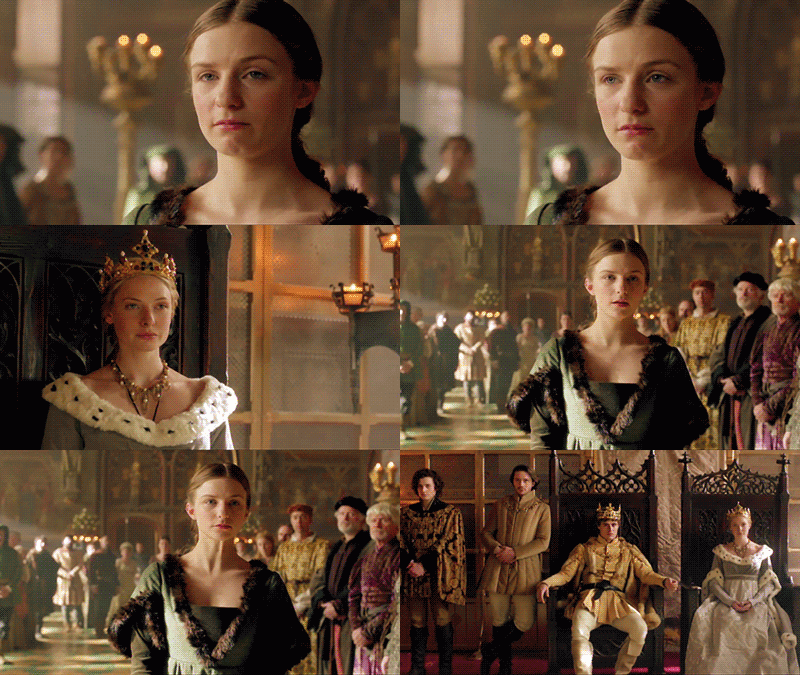
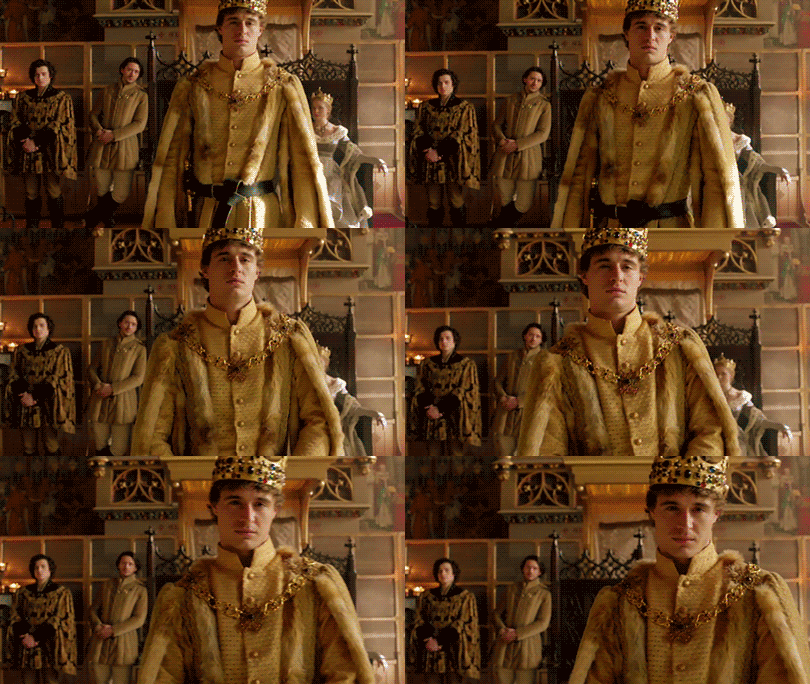
The White Queen


Summary:

In 1464, the War of the Roses between the Houses of York and Lancaster is in its ninth year.  Although the sly Earl of Warwick has succeeded in having the easily-controlled Edward IV of York crowned, all his work could be undone when the new monarch falls in love with Elizabeth Woodville, a commoner.  This BBC adaptation of Philippa Gregory's series, The Cousin’s War, follows the women caught up in the battle to be the rightful king of England.
This show was commissioned by the BBC and aired in the UK first.  However, an 'uncut' version of the show was later shown by Starz in the US.
(From TV.com)


Review:

 Having read Philippa Gregory’s Cousin War Series (The White Queen, The Red Queen, and The Kingmaker’s Daughter), I was over the moon excited to find that Starz and BBC had created a made for TV series sculpted after the novels. With Philippa Gregory as executive producer, I hoped that the series would run true with the books, and I was not disappointed. Set in late 1400’s England, The White Queen brings viewers inside the intriguing and secretive world of the York and Lancastrian dynasties. Starting with the chance meeting of Elizabeth Woodville and Young King Edward, The White Queen depicts the a more intimate side of the English court. The series allows the viewer to catch a glimpse of the ethereal royals in very earthly and precarious situations ranging from adultery, jealous rages, and blissful unions.

 To draw comparisons between the books and the series, one would assume, would cause me to find great fault where actor choice and scene selection are concerned. Surprisingly, that did not occur. The choice of actors for the roles of  Queen Elizabeth Woodville, Richard Duke of Gloucester, (later King Richard III), Anne Neville, and Lady Margaret Beaufort were exceptionally true to their descriptions in the books, leaving me to wonder if someone was spying on my mind’s eye as I read the novels. I was particularly thrilled that the scenes from the books that were omitted in the series were few, and those included were taken directly, word for word, from the pages of the three novels. My only criticism is the manner with which the series ends. Originally, the White Queen was to have multiple seasons in order to encompass the breadth of material in the novels. After mixed reviews on the BBC, the series was pulled, leaving those who have not read the books at the edge of an exceedingly lofty cliffhanger. With that said, it was an appropriate place to end had another season been in the works. My suggestion would be to read the three novels, or her entire Cousins War series if you are feeling adventurous, and then watch the series. Doing so will give you a greater appreciation for the close relationship between what was written and what was shown, as well as not leaving you wanting when the series is over. I give this series four stars. It could easily have been a five if the series had not been canceled. The books, however, get a resounding and bold five stars! 

Thursday, September 18, 2014

The Invention of Wings


Summary:

 Hetty "Handful” Grimke, an urban slave in early nineteenth century Charleston, yearns for life beyond the suffocating walls that enclose her within the wealthy Grimke household. The Grimke’s daughter, Sarah, has known from an early age she is meant to do something large in the world, but she is hemmed in by the limits imposed on women.

Kidd’s sweeping novel is set in motion on Sarah’s eleventh birthday, when she is given ownership of ten year old Handful, who is to be her handmaid.We follow their remarkable journeys over the next thirty-five years, as both strive for a life of their own, dramatically shaping each other’s destinies and forming a complex relationship marked by guilt, defiance, estrangement and the uneasy ways of love.
As the stories build to a riveting climax, Handful will endure loss and sorrow, finding courage and a sense of self in the process. Sarah will experience crushed hopes, betrayal, unrequited love, and ostracism before leaving Charleston to find her place alongside her fearless younger sister, Angelina, as one of the early pioneers in the abolition and women’s rights movements.
(From Goodreads)

Review:


 What does it mean to be free? Does it take the literal form as being physically free from bondage? Or, perhaps freedom can also be used to describe an independent state of mind? In Sue Monk Kidd's The Invention of Wings, both scenarios are true. Set in the slave-driven south, Kidd’s fictional interpretation of the lives of famed abolitionists and female rights activists Sarah and Angelina Grimke delve into the idea of freedom as a concept both mental and physical, showing each from the unique perspective of both hesitant master and slave.

 The opening scenes of the book truly set the stage for what will develop into a complicated and, at the time, socially unacceptable relationship between Sarah Grimke and her 11th birthday present, a young slave named Hetty “Handful” Grimke. Sarah, even at the young age of 11, knows that slavery is wrong, and tries to reject her “gift”, much to the chagrin of her overbearing mother. This disdain for the peculiar institution of slavery never leaves Sarah, even after forcibly accepting Handful as her slave. If anything, it propels her to follow a path that she feels is righteous and true.  Sarah has dreams and aspirations of pursuing a career in law, just like her father and brother, hoping to be able to one day make a real difference in the world. She feverishly studies her father’s law books, and even garners her father’s praise as having a gift for the vocation.  A turning point for both girls is the discovery that Sarah has taught Handful to read. This is viewed as criminal in the racially divided South, leaving Handful with physical scars from a severe beating, and Sarah with the mental scars of being severed from her father and his beloved books.  

 After having her dream of attaining a law degree is dashed, Sarah leaves the South and Handful behind to pursue an abolitionist’s cause. Once in the North, however, Sarah finds that her freedom from the South is merely just a physical removal, encountering her own form of discrimination because she is a woman who holds strong opinions. Her struggle for women’s rights brings her great notoriety, as well as influential enemies bent on suppressing her voice. This begs the question: Is she TRULY free?

 Handful, in contrast, spends her days perfecting her seamstress craft. Eventually, she becomes well known for her talent with a needle and thread, and finds herself in high demand, not only on the Grimke plantation, but all over Charleston, South Carolina. Handful hopes this new found demand is her ticket to freedom. She creates a mental sense of independence that gives her the courage to believe that one day she could be free. Her true freedom comes by way of a family quilt started by her mother that depicts the lineage of her family. Her need to finish this quilt allows her a spiritual freedom that transcends the physical bondage of slavery, even though she remains on the Grimke plantation where even Sarah is unable to set her free. It becomes clear that her mental freedom is far more liberating than Sarah’s bodily freedom in the North.

 After reading this novel, I was left with a real admiration for Kidd’s attention to detail and adherence to historical reality . . . as much as that is possible in a piece of fiction. As I read the story, I found that I could hear the characters speaking to me right from the page. The dialogue is written in such a way, that you feel as though you are there, hearing every twang and colloquial term that you might expect from the time period.  The complex task of unveiling the antebellum South through the eyes of both master and slave is done with great mastery, while still making this a story of triumph over great adversity that transcends the centuries.

Admittedly, I have not read any other pieces by Sue Monk Kidd, so I really have no basis to compare this with her other novels, but as a stand-alone The Invention of Wings has all of those smart touches that makes the reader want to devour more of her work. She runs the gamut of emotion from witty humor to unabashed disgust over the treatment of Hetty and her fellow plantation workers. Readers will laugh, cry and cheer out loud! If you are expecting the run of the mill antebellum novel, you will be more than pleasantly surprised at the depth of the characters, as well as the brazen and bold face put to the early abolition and women’s right movements. Without reservation or hesitation,  I give this book 5 stars.